
LRA · RWA · VACUUM DISTILLATION
Solvent recovery systems
Contaminated solvents are not waste but a raw material that can stay in the process. Our systems treat them by distillation, fully automatically and with a recovery rate of up to 99 per cent.
Over 35 years
of experience in plant engineering
Up to 99 %
recovery rate in many processes
8 to 1,300 l/h
throughput range
ATEX
2014/34/EU certified
Process
Vacuum distillation instead of disposal
The solvent is evaporated under vacuum and condensed again. Because the boiling point drops under vacuum, the process works at lower temperatures. What remains is a concentrate that is disposed of in a much smaller quantity.
Recovery is cost-effective from as little as 8 litres per hour. At the upper end, the range extends to 1,300 litres per hour.
Why under vacuum?
- The boiling point drops: the solvent evaporates gently and is hardly exposed to thermal stress.
- Even higher-boiling solvents can be treated at moderate temperatures.
- The distillate goes back into the process, only the small residue is disposed of.
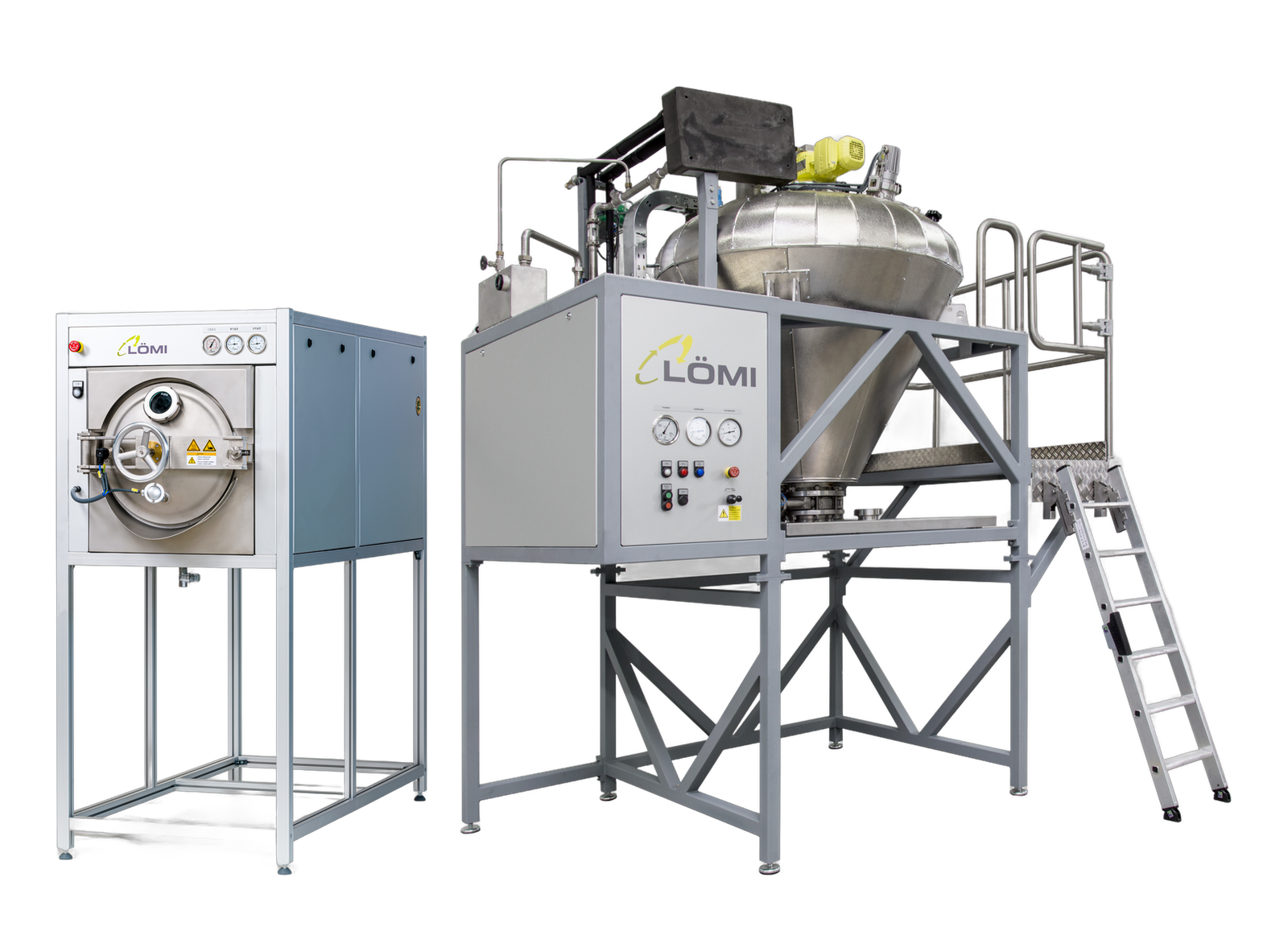
up to 99 %
recovery rate in many processes
How it works
Solvent recovery in three steps
Solvent recovery, also known as solvent recycling, means treating contaminated solvent so that it can be used again. Distillation makes use of the different boiling points. The solvent evaporates, while paint residues, resins, oils and solids stay behind. The entire process runs fully automatically.
01
Evaporation
The contaminated solvent enters the heated distillation vessel and boils under vacuum at a low temperature. Solids and high-boiling components do not evaporate with it.
02
Condensation
During condensation, the solvent vapour flows into the condenser, cools down and becomes liquid again. The clean distillate is ready for its next use.
03
Residue discharge
What remains is a thickened residue containing the contaminants. It is only a fraction of the original quantity and is disposed of properly.
Series
Two series, one task
Both series are designed for your process: for the solvent, the contamination and the throughput. There is no off-the-shelf system. Design, engineering and manufacturing take place at our site in Großostheim.
01
LRA
System for the distillative treatment of small quantities of contaminated solvents. Horizontal distillation vessel in a compact housing.
Throughput: 8 to 30 l/h
Vessel volume: 50 to 250 l
02
RWA
The right system for medium and large distillation rates. Vertical distillation vessel with agitator.
Throughput: 50 to 1,300 l/h
Vessel volume: 300 to 4,000 l
Animations
How LRA and RWA work
The 3D animations show the design and operating principle of both series.
LRA
Compact system for small distillation rates. Animation, about 3 minutes.
RWA
System for medium and large distillation rates. Animation, about 3.5 minutes.
In practice
2,000 litres per day in prepress
A system from the RWA series treats 2,000 litres of solvent per day in prepress. The solvent stays on site instead of leaving the company as hazardous waste.
This eliminates or reduces three cost items: the disposal of used solvent, the purchase of new solvent and the dependence on purchase prices.
An RWA-800 system is in operation. All details on this application and two others from printing and paint manufacturing can be found in our case studies on solvent recovery.
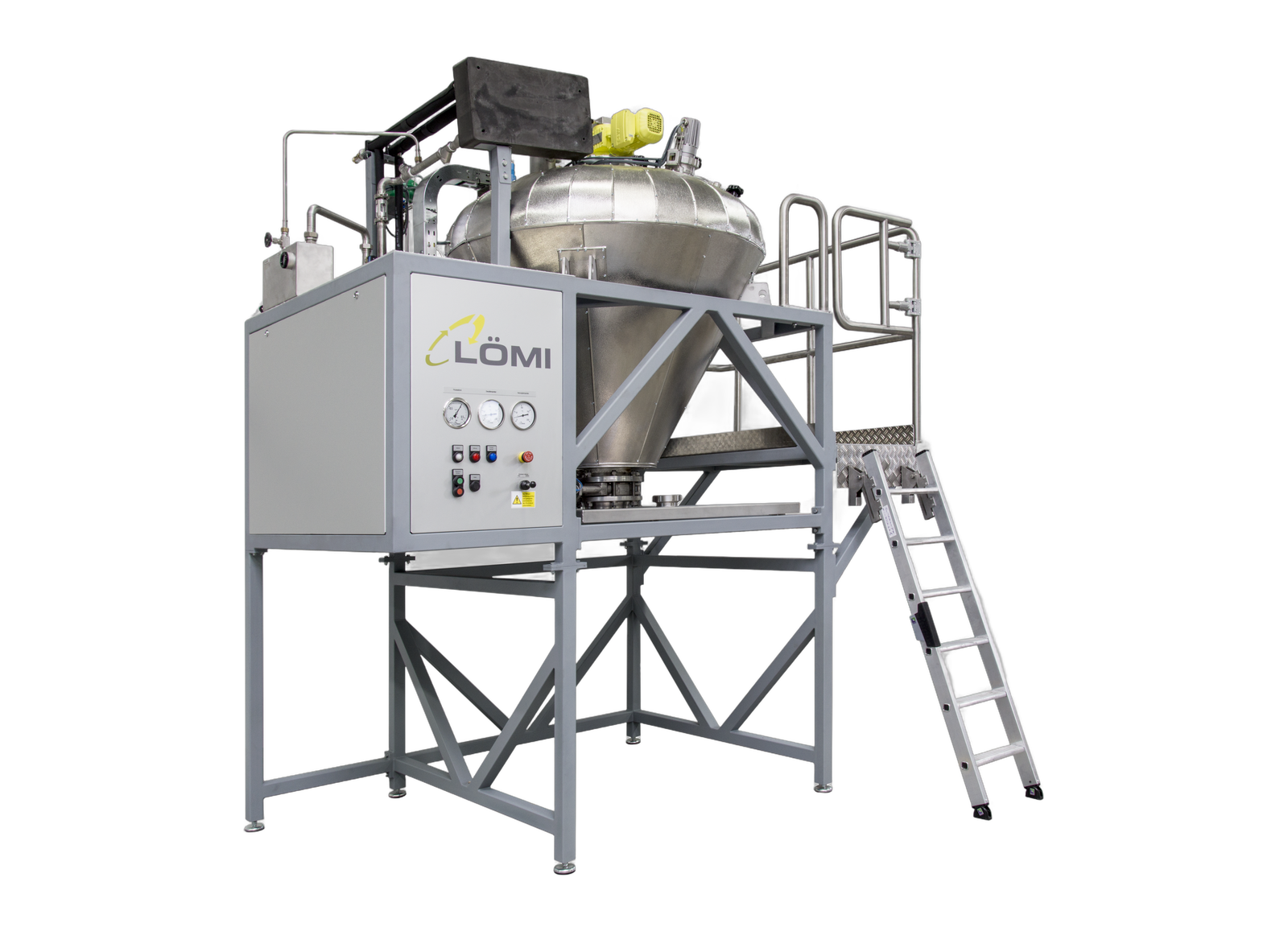
2,000 l
of solvent treated per day
References
A selection of our customers
Frequently asked questions
Questions about solvent recovery
What is solvent recovery?
Which solvents can be recovered?
Which system is right, LRA or RWA?
From what quantity is a system worthwhile?
How high is the recovery rate?
What happens to the residue?
What are the environmental benefits of recovery?
Are the systems approved for potentially explosive areas?
Where are the systems built?
Contact
Tell us about your application.
We will get back to you with an honest assessment and a specific proposal.